ERP for US Subsidiaries: Why Two-Tier Beats a Rollout
 19. October 2026
- By Berias
 19. October 2026
 Share


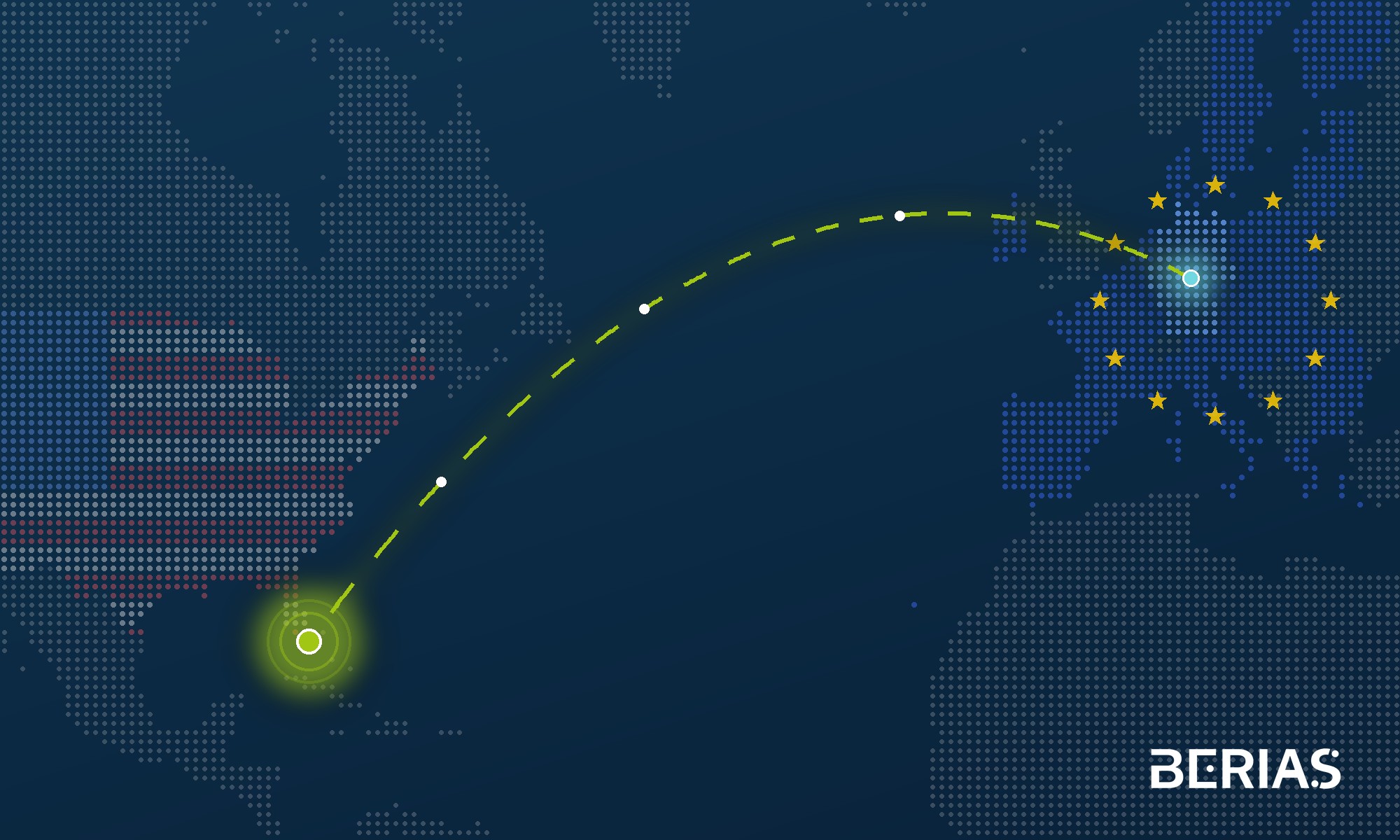
A German Mittelstand company opens a sales and service entity in Florida. Twenty people at the start, maybe forty in three years. Headquarters runs SAP, so the plan writes itself: roll the same system out to the US. Same processes, same reports, one landscape.
That plan often costs more than the subsidiary earns in its first years. And when it goes wrong, the software is rarely the reason.
This article looks at how German and European companies can set up ERP for a US subsidiary without overbuilding it, what two-tier ERP means in practice, and where these projects usually break.
German companies are putting money into the US again
The German American Chambers of Commerce (GACC) survey German subsidiaries in the US every year. The 2026 German American Business Outlook had 243 respondents. After a difficult 2025, 82% expect sales growth in 2026. 67% plan to increase their US investments this year, and 56% plan to invest more than one million dollars over the next three years. Workforce development and digital transformation top the list of investment priorities.
Florida is a big part of that picture. According to the Transatlantic Economy 2026 report, European companies directly supported 248,700 jobs in Florida in 2023, 49% more than in 2012. German companies alone accounted for 39,500 of them. Germany was also Florida’s largest European import market in 2024, at almost 8.9 billion dollars.
A lot of this investment lands in the back office: finance, order management, inventory, service, reporting to headquarters. That is where the ERP decision gets made, usually fast and usually from Germany.
Why “just roll out the HQ system” often fails
The headquarters system was built for headquarters. It carries 20 years of German processes, custom reports and approval chains that a 25 person sales office in Doral or Tampa will never use.
This isn’t only our view. On SAP’s own German news site, an implementation lead at All for One makes the same point: subsidiaries often don’t need the functional depth of the headquarters system, and smaller ones are frequently overwhelmed by tier one systems in both functionality and cost. What happens next is predictable. The subsidiary buys something cheap locally, and the group ends up with a patchwork of systems and spreadsheets for consolidation.
So companies end up with one of two bad outcomes: an expensive rollout that the US team never fully adopts, or local shadow IT that finance in Germany has to clean up every month.
The budget gap is real, too. SAP partners we talk to in South Florida put a full S/4HANA project for a subsidiary at around one million dollars. Many of the subsidiaries we meet are working with a third to half of that.
What two-tier ERP means in practice
Two-tier ERP splits the landscape. Headquarters keeps its main system (tier one) as the financial system of record. The subsidiary runs a leaner, standardized cloud ERP (tier two) that connects to headquarters through defined interfaces.
In the SAP world, the tier two system is typically SAP S/4HANA Cloud Public Edition. The subsidiary adopts predefined standard processes instead of designing everything from scratch, and US localization comes as part of the product.
How tightly the two tiers are connected is a business decision, not a technical one:
- Light integration: the subsidiary sends financial data to headquarters for consolidation. Enough for an entity that runs fairly independently.
- Process integration: business processes run across both systems. When headquarters negotiates supplier terms, the US entity sees them automatically. Intercompany orders flow without retyping.
Most companies want some form of this. An IDC study found that 89% of organizations believe they need to integrate subsidiary ERP systems into their core ERP.
A real example: Canyon’s US subsidiary, live in under six months
Canyon Bicycles, the direct-to-consumer bike brand from Koblenz, used a two-tier approach when it founded its US sales subsidiary. Sales, service, purchasing, warehouse, third party logistics, assembly and finance for the US entity run in a cloud ERP connected to the German headquarters, including the webshop and payment provider. According to SAP, the initial template went live in less than half a year, and the project was run from Koblenz.
Two things stand out. First, the scope was large, so two-tier doesn’t mean “small and simple.” Second, the speed came from accepting standard processes instead of rebuilding the German setup.
Software is rarely why these projects fail
Gartner predicts that by 2027, more than 70% of recently implemented ERP initiatives will fail to fully meet their original business case goals, and as many as 25% will fail catastrophically. In a Gartner survey of 251 technology leaders, 73% said their ERP strategy was not strongly aligned with their business strategy. Panorama Consulting’s 2026 ERP Report found that fewer than 25% of organizations put intense focus on change management during implementation.
None of these numbers is about bad software. They describe unclear goals, weak ownership and people who were never brought along.
A transatlantic project adds its own layer on top:
- Requirements get written in Germany, in German, around German processes. State sales tax, US payroll providers and local banking habits show up late.
- The US team wasn’t in the blueprint workshops. They see the system for the first time in user training.
- Headquarters treats go-live as the finish line. For the US team, that’s the day the real problems start.
- Both sides think they agreed. They just meant different things.
We’ve seen projects where the configuration was fine and the US team still kept running the business in Excel six months later.
Five questions to answer before you sign anything
- What does headquarters actually need from the US entity? Consolidated financials only, or shared processes like procurement and intercompany orders?
- Which processes are truly US specific? Sales tax, payroll, payment terms, customer expectations around service.
- Who owns the project on the US side, and how much of their week is really available for it?
- Who translates between headquarters and the US team? Language is the smaller part. Business culture and decision making are the bigger one.
- How will you measure success six months after go-live? Pick two or three numbers now, for example days to close the month, order entry time or manual reconciliation hours.
If you can’t answer these, picking a system is premature.
Where BERIAS fits
BERIAS works on the implementation side, together with SAP partners. We take care of what tends to fall between headquarters, the US team and the implementation partner: process discovery with the people who will actually use the system, project management across both time zones, testing and acceptance, and adoption after go-live. We work in German and English, with offices in Coral Gables and Bavaria.
Planning ERP for your US subsidiary, or already in a project that feels stuck? Book a free 30-minute call and we’ll look at where you stand.
FAQ
What is two-tier ERP? A setup where headquarters keeps its main ERP system and subsidiaries run a smaller, standardized ERP that is integrated with it. Headquarters keeps control of financial data, and the subsidiary gets a system sized for its needs.
Which SAP system fits a US subsidiary in a two-tier model? In SAP landscapes, the subsidiary typically runs SAP S/4HANA Cloud Public Edition, connected to an S/4HANA or ECC system at headquarters. The right choice depends on how deeply processes need to be integrated.
Why do ERP projects at US subsidiaries fail? Mostly for organizational reasons: unclear business goals, no real owner on the US side, too little change management, and requirements defined at headquarters without the local team.
Sources: GACC German American Business Outlook 2026 · Transatlantic Economy 2026, Florida (AmCham EU) · SAP News: Cloud-ERP Tochtergesellschaften anbinden · IndustryWeek: Subsidiary operations and two-tier ERP · IDC InfoBrief via ASUG/Vision33 · LeverX: Two-tier ERP strategy · Gartner: Avoid disappointing ERP initiatives · The Register: Gartner on ERP failure · Impact: ERP stats 2026 (Panorama)